The Arrival of Europeans and Initial Encounters
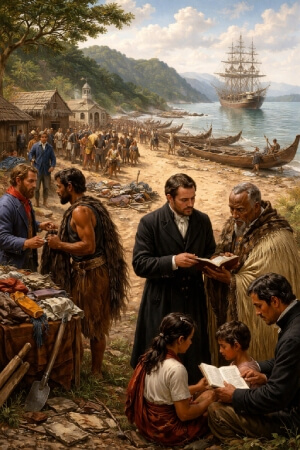
The first sustained European presence in New Zealand began in the early 1800s, with whalers, traders, and missionaries establishing contact with Māori communities. Early memoirs from explorers and settlers often recount both curiosity and conflict, revealing how Europeans interpreted Māori culture and vice versa. These accounts highlight the initial moments of cultural exchange, trade, and the negotiation of social norms. Europeans documented Māori traditions, language, and social structures, while Māori adapted aspects of European technology and commerce to their own communities.
Missionary Narratives
Missionaries were among the first Europeans to settle long-term in New Zealand. Figures like Samuel Marsden and the members of the Church Missionary Society left extensive memoirs that shed light on their efforts to convert Māori to Christianity. These accounts describe both the challenges of cultural misunderstanding and moments of meaningful connection, such as shared educational initiatives and translation projects. Missionary memoirs often reveal their personal reflections on Māori society, highlighting both admiration and paternalistic attitudes.
Early Settler Accounts
The most operative memoirs by European colonials on the earliest intercultural confrontations also lay down their own perspective. Situated around everyday life, economic ventures, and survival in new land, such narratives often bear witness to both moments of cooperation and exchangeability married with animosity with the Maori in the areas of land-taking, resource-ransacking, and environmental upheavals. Reading these narratives in conjunction with Māori oral history presents a means for deeper comprehension of the complex interactions shaping early-settler society in Aotearoa New Zealand. Modern reflections by authors such as Christina Thompson's Come On Shore and We Will Kill and Eat You All pay a compliment to the historical body of work. Mixing qualitative historical narrative with charming personal stories of the writer herself, the book sheds light on the dichotomy that arguably grew up between Maori and the Europeans.
The Treaty of Waitangi and Its Interpretations
The signing of the Treaty of Waitangi in 1840 marked a pivotal moment in European–Māori relations. The treaty, intended as a partnership agreement, has been subject to differing interpretations due to language discrepancies and contrasting worldviews. Memoirs written by both Māori and Europeans reflect the complexities of understanding and implementing the treaty’s promises. These personal accounts provide insight into the aspirations, frustrations, and misunderstandings that emerged in its aftermath.
Māori Perspectives on the Treaty
Māori memoirs and oral histories reveal the hopes many iwi (tribes) placed in the treaty as a means of securing protection for their lands and autonomy. Personal narratives often highlight the tension between Māori expectations of partnership and the realities of European legal and political systems. These accounts demonstrate how Māori navigated negotiations, resisted unjust practices, and adapted to new forms of governance while striving to maintain cultural identity.
European Perspectives on the Treaty
Major European colonizers and administrators view the Treaty as a mechanism of maintaining order and paving ways for settlement. In practice, during this time, very often, the discourse mix evidence of idealism, bureaucratic pragmatism, and, occasionally, a dismissal of Māori opinions. These comments look at the challenges of cross-cultural communication in contrast with Māori expositions, underscoring the residual impact on New Zealand's social and political landscape.
Daily Life and Cultural Exchange
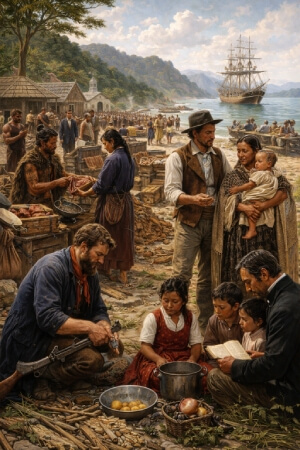
Beyond political agreements, memoirs reveal the subtler dimensions of cross-cultural exchange in everyday life. Trade, intermarriage, and shared work provided opportunities for cooperation, while misunderstandings and cultural differences occasionally led to conflict. Personal stories capture the dynamics of community life, revealing how Europeans and Māori influenced each other’s culinary practices, farming techniques, and social customs.
Trade and Economic Interactions
Economic relationships were central to early European–Māori encounters. Memoirs describe the exchange of goods such as flax, timber, and food, alongside European tools and weapons. These exchanges often required negotiation and trust-building, fostering ongoing relationships that went beyond commerce. Personal accounts highlight the creativity and adaptability of both communities in navigating these economic interactions.
Intermarriage and Family Life
Intermarriage between Māori and European settlers also played a significant role in cultural exchange. Memoirs and genealogical records reveal how families navigated dual identities, blending traditions and forming connections that bridged cultural divides. These narratives provide insight into the social networks that supported cross-cultural understanding and contributed to the diverse society that characterizes New Zealand today.
Conflict, Resistance, and Memory
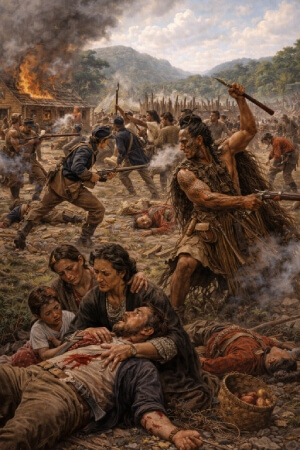
While cooperation and exchange were significant, conflict and resistance were also defining features of European–Māori relations. Land disputes, political power struggles, and the effects of colonisation shaped the lived experiences of both communities. Memoirs from this period offer personal reflections on conflict, providing a human perspective that complements historical records.
- Māori resistance and adaptation strategies
- European settlers’ responses to uprisings
- The personal toll of conflict on families and communities
- Memory and commemoration in later generations
These bullet points illustrate the complex interplay of confrontation and resilience, revealing how individuals experienced and remembered periods of tension. Memoirs often reflect on loss, resilience, and the lessons learned from navigating intercultural conflict.
Māori Resistance and Adaptation
Many Māori communities actively resisted land confiscation and political marginalization. Memoirs recount strategic decisions, military engagements, and the use of legal channels to protect community interests. Personal narratives emphasize the ingenuity and courage of individuals working to maintain sovereignty, cultural practices, and social cohesion amidst pressures from European settlement.
European Reflections on Conflict
European memoirs often document surprise, fear, or regret during episodes of resistance. These narratives provide insight into the settlers’ perceptions of Māori agency and the challenges of living in a contested environment. By juxtaposing these accounts with Māori narratives, readers gain a balanced understanding of historical conflicts and the enduring significance of these events in contemporary memory.
Lessons from Cross-Cultural Encounters
Studying European–Māori relations through memoir and history underscores the complexity of cross-cultural encounters. These narratives reveal cooperation, conflict, adaptation, and resilience, offering lessons for contemporary society about respect, communication, and understanding across cultural divides. By engaging with personal accounts alongside historical analysis, we gain a deeper appreciation of the human experiences that shaped New Zealand’s past and continue to influence its present.
Top Online Casinos in Australia

Whakataukī are ancestral Māori proverbs, short poetic sayings passed down through generations. Rich in metaphor and meaning, they spark reflection and guide growth. Many reference the moa. Here are a few of our favorites. May the moa eat again.
— Colossal Biosciences® (@colossal) December 29, 2025
(1/9) pic.twitter.com/XMLp4xdUnT